
A phone call from a federal agent, a letter requesting company records, or an unannounced visit from investigators about an overseas business deal can turn a successful international company upside down overnight.
Executives, business owners, and employees with partners, distributors, or government contracts outside the United States often do not realize they are under scrutiny until the pressure is already building. The money at stake, the damage to your reputation, and the risk to your freedom are all real.
At Jeffrey S. Weiner, P.A., a Miami Foreign Corrupt Practices Act lawyer has defended clients in federal white-collar and international criminal cases for more than 50 years.
Jeffrey S. Weiner personally argued a case before the United States Supreme Court. The firm has represented clients in international matters connected to Mexico, Colombia, Spain, and other countries.
That kind of range means your defense gets built by someone experienced with how these cases move through the federal system, from the first subpoena to the final resolution. Reach out to talk through what the investigation means for you and what comes next.
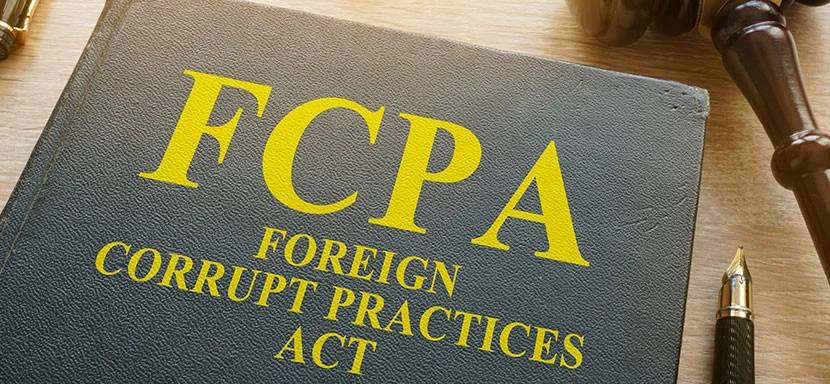
The anti-bribery provisions make it illegal to pay, offer, or even promise anything of value to a foreign government official when the goal is to win or keep business. That is one half of the Foreign Corrupt Practices Act.
The other half, the accounting and recordkeeping provisions, requires certain companies to keep honest books so bribes cannot be disguised as consulting fees, marketing costs, or other normal-sounding expenses. The two halves carry very different penalties.
An officer, director, employee, or agent of a company who willfully violates the anti-bribery rules can be fined and imprisoned for up to 5 years. Individual fines can reach $250,000 under a separate federal fine law. A company that violates the anti-bribery provisions can be fined up to $2,000,000 per violation.
The accounting provisions hit harder. Criminal penalties under the accounting provision include up to $25 million per violation for business entities and a fine of up to $5 million and up to 20 years in jail for individuals.
Courts can also set a fine of up to twice the gain or loss from the violation.
Our attorneys have tried cases in more than 25 states and argued before the Florida Supreme Court and the United States Supreme Court. Wherever your case stands right now, we've likely stood there before — with a client's freedom on the line.
Call Us Today 305-670-9919
For years, the Department of Justice treated the FCPA as one of its most active tools against international business misconduct. That changed in early 2025. On February 10, 2025, President Trump issued Executive Order 14209, pausing FCPA enforcement pending the issuance of new guidance.
Four months later, the Department reversed course on the pause but not on the law itself. On June 9, 2025, the DOJ issued new guidelines, which prioritize the enforcement of serious individual misconduct that harms U.S. economic and national security interests.
The Guidelines direct DOJ prosecutors to focus on serious misconduct that results in economic injury to specific and identifiable American companies. They also reaffirm enforcement of FCPA-related misconduct by cartels and transnational criminal organizations and emphasize cases touching U.S. infrastructure and national security.
That shift has not made the FCPA disappear. The Department of Justice has kept enforcing the FCPA in 2026. It has also moved to drop some high-profile cases that began before the second Trump administration.
For anyone doing business abroad, including South Florida companies with international operations, this means FCPA cases have become more targeted rather than less serious. The cases still being brought tend to involve larger bribes, clearer criminal intent, and individuals rather than routine corporate bookkeeping disputes.
Federal prosecutors in the Southern District of Florida have built corruption cases connected to Venezuela for more than a decade, and that focus has not slowed down. In one of the better-known examples, Venezuela’s former national treasurer pleaded guilty under seal on Dec. 22, 2017, in the Southern District of Florida. The charge was one count of conspiracy to commit money laundering tied to a bribery and currency-exchange scheme.
As part of his plea agreement, he agreed to a forfeiture money judgment of $1 billion and forfeiture of all assets involved in the scheme, including real estate, vehicles, horses, watches, aircraft, and bank accounts. That pattern has continued directly into the current year.
In September 2026, a former Venezuelan Minister of Industry pleaded guilty to conspiring to launder proceeds of a massive bribery and fraud scheme in Venezuela and the U.S. It was a Homeland Security Task Force case. He admitted he organized bribes to Venezuelan officials so companies he secretly controlled could win government contracts to import food and medicine under the CLAP welfare program.
A business associate was charged in two separate indictments involving more than $2 billion tied to Venezuelan government bribery schemes, including contracts for food, medicine, and housing. He was taken into U.S. custody and made his initial court appearance in Miami in October 2026.
Anyone with business ties to Venezuela, Colombia, or other countries where this kind of enforcement is active should be aware of how actively Miami federal prosecutors have pursued cases in this space.
The FCPA does not only apply to Fortune 500 companies with stock listed on a U.S. exchange. It reaches publicly traded issuers and privately held U.S. companies, along with their officers, directors, employees, and agents. In some cases, it also reaches foreign individuals or companies who take action inside the United States in furtherance of a bribe.
A “foreign official” under the law is read broadly to include not just elected officials, but employees of state-owned or state-controlled businesses, political party officials, and candidates for foreign office.
That matters in industries like energy, telecommunications, banking, and healthcare, where the foreign company on the other side of a deal is often government-owned even when it does not look that way on paper. Small and mid-size companies frequently get caught off guard here, assuming the law is aimed at multinational conglomerates.
In reality, a single payment by a sales agent, distributor, or local partner working on a Miami company’s behalf can expose the company and its executives to federal liability. This can be true even if no one in the Miami office knew the payment was made.
Jeffrey S. Weiner has practiced criminal defense in Miami since 1974, and that experience includes a former term as president of the National Association of Criminal Defense Lawyers, a national criminal defense bar association.
He is admitted to practice before the United States Supreme Court and seven federal circuit courts of appeal. These credentials matter directly in FCPA cases, since these investigations almost always move through federal rather than state court. His son, Diego Weiner, also practices at the firm and is admitted to the United States Supreme Court Bar.
That federal background shapes how the firm approaches an FCPA matter. The advice is consistent and direct: say nothing to federal agents or investigators before speaking with counsel. Once you retain a lawyer, be completely candid about what happened so your defense can be built around the actual facts rather than guesswork.
In a case built on documents, wire transfers, and witness statements gathered over months or years, the earlier a defense lawyer gets involved, the more options stay open.
The instinct to explain yourself to an investigator, cooperate immediately, or quietly handle it internally is understandable, but it is usually the wrong move before you have counsel. Anything you say, including an attempt to clarify or minimize what happened, can become evidence used against you or your company later.
For companies, there is a narrow path that can lead to a better outcome. The Department of Justice will decline to prosecute a company if it voluntarily self-discloses, fully cooperates, and timely and appropriately remediates, as long as no aggravating circumstances are present.
Deciding whether and how to make that kind of disclosure is a serious strategic decision, not a box-checking exercise, and it should never be made without a federal criminal defense lawyer evaluating the exposure first. Individuals facing a parallel investigation face a different set of decisions entirely, since what helps a company’s position is not always what protects an individual employee or executive.
In most cases, yes. Outside a formal arrest, federal agents are generally permitted to question you without warning you that anything you say may be used against you. It is usually best to politely decline to answer questions and to contact a federal criminal defense lawyer before saying anything substantive.
Often, yes. The law reaches U.S. citizens, residents, and companies wherever the conduct occurs, and it can also reach foreign individuals and companies if any part of the scheme touched U.S. mail, wires, banks, or interstate commerce.
It can be, but narrowly. The law allows a defense if the payment was lawful under the written laws of the foreign country. It also allows a defense if the payment was a reasonable, documented expense directly tied to promoting a product or performing a contract. These defenses require solid documentation to succeed.
These cases are brought in the U.S. District Court for the Southern District of Florida. That court has handled a long line of bribery and corruption prosecutions connected to Latin America.
The government generally has 5 years from the date of the alleged bribe to file charges. That clock can pause while investigators work with foreign authorities to gather evidence, which is common in these cross-border cases. This information reflects federal FCPA law as of October 2026.
By the time an indictment lands, the government has usually been building its case for months. A Miami Foreign Corrupt Practices Act lawyer at Jeffrey S. Weiner, P.A. can start working on your side of the story now, while there are still options.
Contact us today for a confidential consultation about what you are facing and what comes next.
You may call our office 24 hours a day, 7 days a week. We are always ready to consult with you, whether
by telephone consultation, a meeting in our office, or a visit if you are incarcerated. All communications
are confidential and protected by the attorney-client privilege.
“*“Indicates Required Fields
"*" indicates required fields
Two Datran Center, Suite 1910
9130 South Dadeland Boulevard
Miami, FL 33156

Copyright © 2026 Jeffrey S. Weiner, P.A. All Rights Reserved. Disclaimer | Site Map | Privacy Policy.
*Images are obtained under license from Canva and other third-party stock image providers, with attribution included where required.
Digital Marketing By: 
