
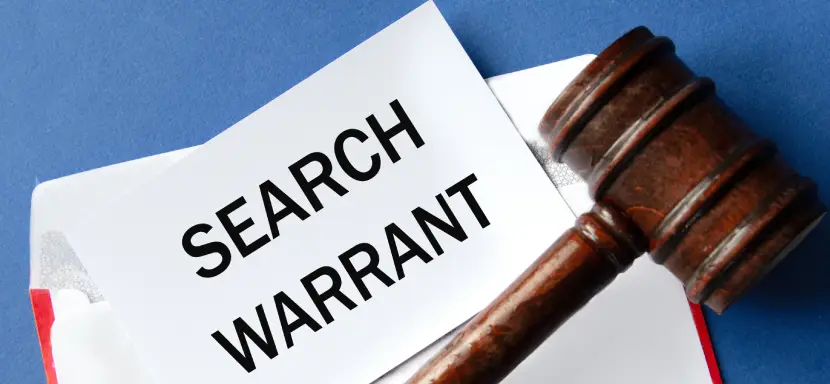
Under the Fourth Amendment of the United States Constitution, you are protected from unreasonable search or seizure by the police. “Search” includes the searching of your person (including pockets and purse), your home, your car, or other property in which you have the reasonable expectation to privacy. In recent times, courts have found that the Fourth Amendment also applies to searches of your cell phones. In order for a search to be allowed under the law, police must generally have a search warrant. There are some exceptions to this requirement, though the majority of searches will require a warrant. Just because police have a search warrant, however, does not mean that the warrant was legitimately obtained. In addition, many police try to push the limits of searches without a warrant or without other justification. In either situation, if a police search occurred, you should immediately speak with an experienced search warrant lawyer in Miami who can evaluate your situation.
In order for a police officer to obtain a warrant, they must show evidence to a judge or magistrate to support probable cause that a search is warranted. Probable cause means that the police reasonably believe – based on more than a hunch – that a search of the location will uncover evidence of a crime. The location of a search must be described in detail and must be specific and they must specify the type of evidence for which they are searching. Police must provide a legitimate basis for why they suspect the evidence is there and must swear to their statements in front of the judge. If the judge finds there is probable cause for a search, they can grant a warrant.
Our attorneys have tried cases in more than 25 states and argued before the Florida Supreme Court and the United States Supreme Court. Wherever your case stands right now, we've likely stood there before — with a client's freedom on the line.
Call Us Today 305-670-9919
In too many cases, police may exaggerate or even fabricate evidence to support a particular search. In addition, a judge may grant a warrant when there is not enough evidence to support probable cause. An experienced attorney can challenge an invalid warrant to have any evidence that stemmed from the warrant suppressed from your case.
You may call our office 24 hours a day, 7 days a week. We are always ready to consult with you, whether
by telephone consultation, a meeting in our office, or a visit if you are incarcerated. All communications
are confidential and protected by the attorney-client privilege.
“*“Indicates Required Fields
"*" indicates required fields
Two Datran Center, Suite 1910
9130 South Dadeland Boulevard
Miami, FL 33156

Copyright © 2026 Jeffrey S. Weiner, P.A. All Rights Reserved. Disclaimer | Site Map | Privacy Policy.
*Images are obtained under license from Canva and other third-party stock image providers, with attribution included where required.
Digital Marketing By: 
